
A
While alcohol does not directly affect the medication, it’s best to avoid drinking as it may increase the risk of side effects like stomach upset.
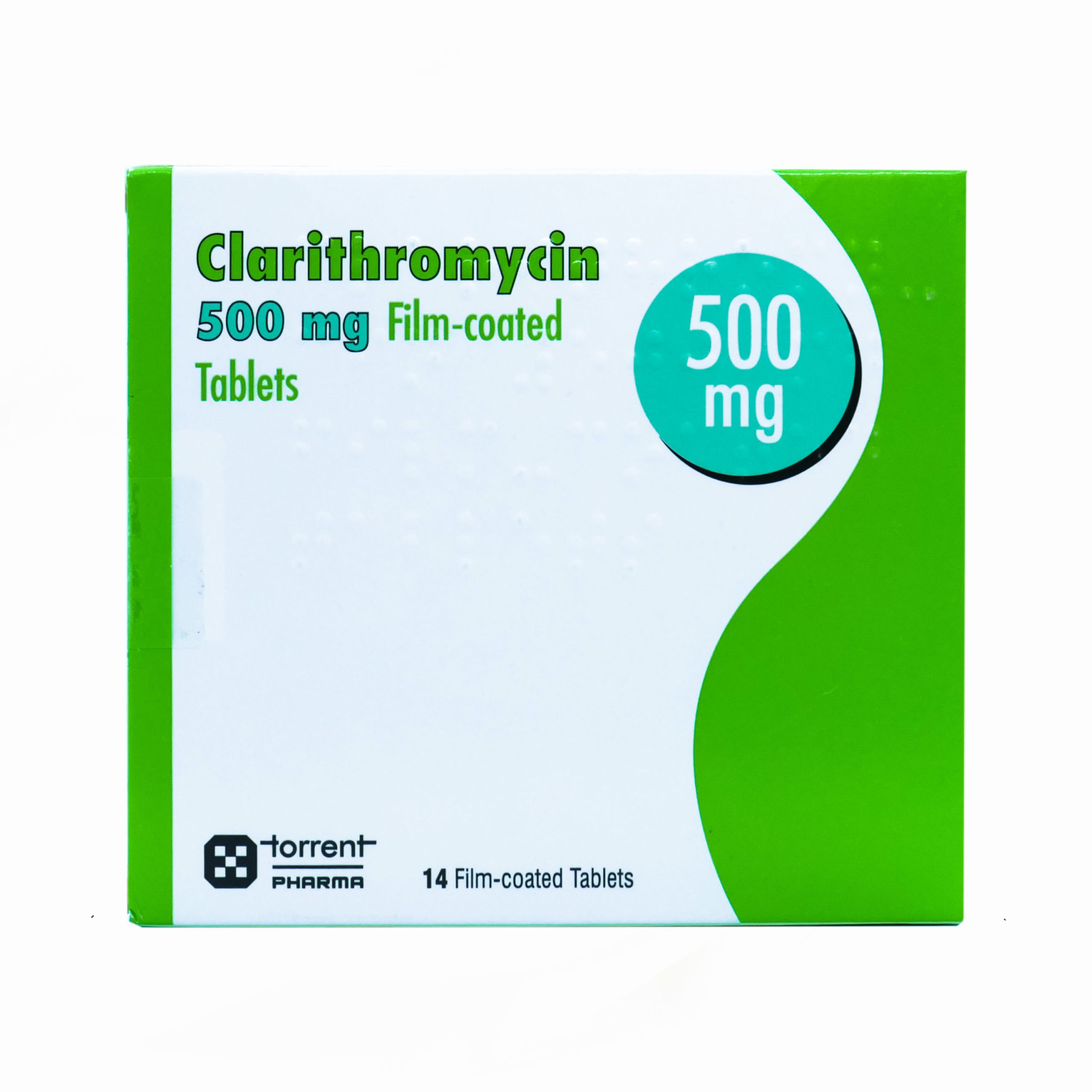
Price range: £24.99 through £29.95
Clarithromycin Tablets are a prescription antibiotic used to treat chest, skin, throat, and stomach infections.
Available in 250mg and 500mg strengths.
Common alternative for patients allergic to penicillin.
Packaging and branding may differ from image shown.
Note: Always follow your doctor’s instructions or the pharmacy label.
Dosage and Frequency: Usually 250mg or 500mg twice daily
Application: Swallow with water. May be taken with or without food
Safety Reminders:
Avoid missed doses
Complete full course
Do not take with grapefruit juice
Storage:
Store below 25°C
Keep in original packaging
Keep out of reach of children
Active Ingredient:
Clarithromycin 250 mg or 500 mg
Other Ingredients:
Lactose monohydrate
Povidone
Magnesium stearate
Microcrystalline cellulose
Talc
Hypromellose
Titanium dioxide
Common side effects may include:
Nausea
Diarrhoea
Taste disturbance
Abdominal discomfort
Headache
Serious (rare) side effects:
Liver problems (jaundice)
Irregular heart rhythm
Severe allergic reaction
Clostridium difficile-associated diarrhoea
Stop the medicine and seek medical attention if serious side effects occur.
Do not take Clarithromycin if you are allergic to macrolide antibiotics. It is not recommended for people with liver dysfunction, QT prolongation, or those taking medications that interact with CYP3A4 enzymes. Caution is advised in pregnant or breastfeeding women. Avoid alcohol and grapefruit juice during treatment.
Clarithromycin Tablets are a macrolide antibiotic used to treat a range of bacterial infections. They are commonly prescribed when patients cannot take penicillin-based antibiotics or for specific conditions that respond better to macrolides. Clarithromycin is particularly effective in treating respiratory infections, throat and sinus infections, skin infections, and bacterial stomach ulcers caused by H. pylori (as part of combination therapy). It is suitable for adults and children (age-dependent dosage) and is available in 250mg and 500mg strengths.
Clarithromycin works by stopping the growth of bacteria. It binds to the bacterial ribosomes, preventing them from producing essential proteins. Without these proteins, the bacteria cannot grow or replicate, and the infection is cleared by the body’s immune system. This makes Clarithromycin a bacteriostatic agent, effective against many common pathogens, including atypical bacteria not well-covered by penicillins.
Clarithromycin is rapidly absorbed into the body and reaches high tissue concentrations, making it especially useful for chest, throat, and sinus infections.
Clarithromycin Tablets for infection are a reliable and trusted option when penicillin alternatives are required. They offer broad-spectrum action against common bacteria and are often used as part of dual or triple therapy for eradicating H. pylori when managing stomach ulcers. The twice-daily dosing is convenient and fits easily into daily routines.
Clarithromycin is often better tolerated than some older macrolides and has a more targeted spectrum than broad-spectrum antibiotics, which helps reduce the risk of resistance when used correctly.
Clarithromycin may interact with several medicines, especially statins, warfarin, and other antibiotics. Always inform your doctor about all medicines you take. Complete the full prescribed course even if you feel better. Store below 25°C and keep out of reach of children. Do not use leftover antibiotics for future infections.
While alcohol does not directly affect the medication, it’s best to avoid drinking as it may increase the risk of side effects like stomach upset.
Yes. Clarithromycin can be taken with or without food, but taking it with a meal may help reduce nausea.
Clarithromycin usually begins working within 1–2 days, but symptoms may take a few more days to improve depending on the infection.
Yes, Clarithromycin is often prescribed as an alternative to penicillin for patients with allergies.
It is used for a variety of bacterial infections including chest infections, throat infections, sinusitis, skin infections, and Helicobacter pylori (H. pylori) in stomach ulcers.




Starting from
£15.99

Starting from
£11.99

Starting from
£36.99

Starting from
£9.79